
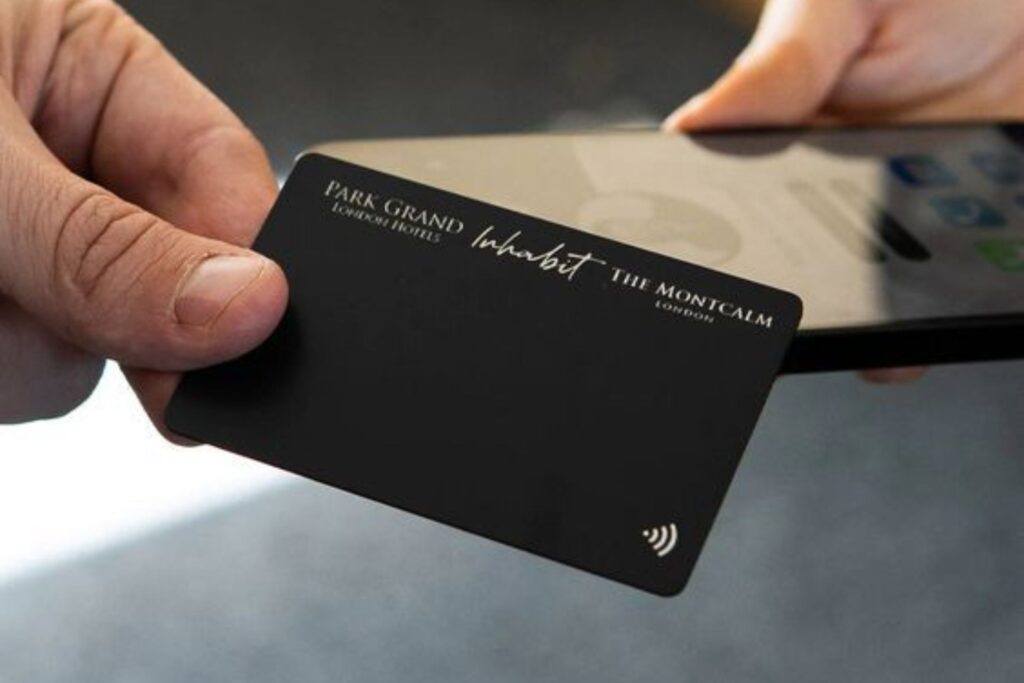
Be honest — how many visiting cards are sitting in your drawer right now?
And how many of those contacts have you actually followed up with?
That’s the quiet problem with traditional printed cards. They’re exchanged with good intentions… then forgotten.
If your brand is still relying only on paper, it might be time to rethink your strategy. The shift from print to tap isn’t just trendy — it’s practical, sustainable, and surprisingly powerful.
In this guide, we’ll break down the real NFC business cards benefits, how they work, and how to transition your visiting card strategy without losing the human touch.
NFC Business Cards Benefits: Why Professionals Are Switching
Let’s start simple.
An NFC business card (Near Field Communication) allows you to share your contact details instantly by tapping your card on someone’s phone. No app required. No typing. No scanning QR codes unless you want to.
That small “tap” solves big networking problems.
Why switch to NFC visiting cards?
- Instant contact saving – No manual data entry.
- Always updatable – Change your details without reprinting.
- Eco-friendly – One card replaces hundreds of paper prints.
- Interactive – Share portfolio links, social media, booking pages.
- Memorable factor – The tap experience stands out at events.
Many professionals report higher follow-up rates when contacts are saved digitally rather than manually typed later.
That’s the difference between handing someone paper… and handing them a live connection.
How NFC Business Cards Work (Without the Tech Confusion)
You don’t need to be technical to use NFC technology for visiting cards.
Here’s what happens:
- Your NFC card contains a tiny embedded chip.
- When tapped against a smartphone, it opens a digital profile link.
- The recipient can instantly save your contact, access your website, LinkedIn, or portfolio.
That’s it.
No battery. No complicated setup. Just proximity-based communication.
How to Use Logo Subtly in Branded NFC Cards
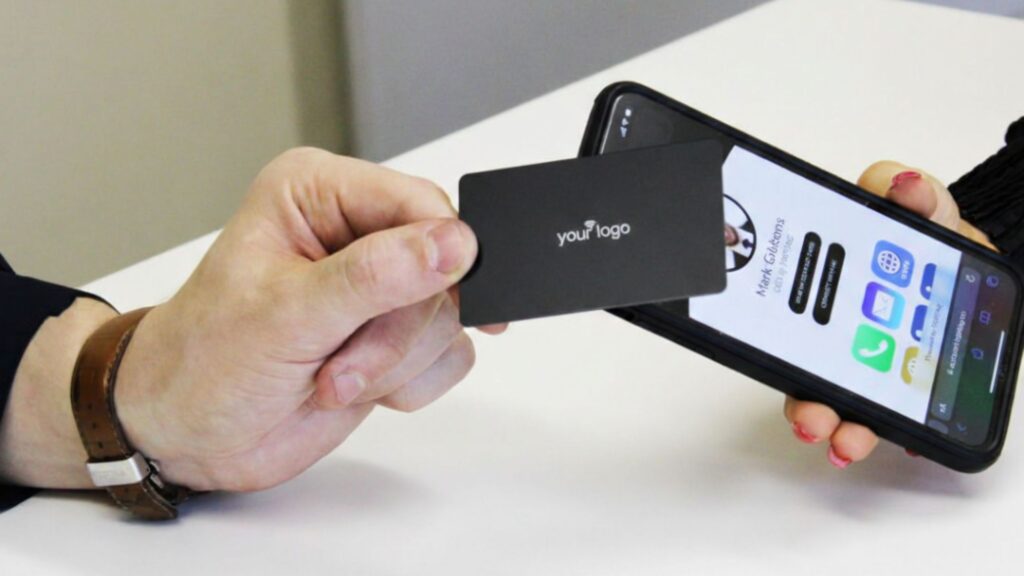
Here’s something important: just because the card is digital doesn’t mean design doesn’t matter.
In fact, design matters even more.
A flashy, overprinted NFC card can feel gimmicky. A minimalist one feels premium.
Best subtle branding practices for NFC cards:
- Laser engraving on metal or matte finish cards
- Embossed logos instead of printed graphics
- Clean typography with plenty of white space
- Tone-on-tone brand marks
The goal is to let the technology impress, not overwhelm it with visual noise.
Mini story:
At a corporate networking summit, two attendees shared NFC cards. One was covered in bright logos and text. The other had a matte black finish with a small engraved mark. Guess which one people kept asking about? The understated one.
Premium tech deserves premium design.
NFC Business Cards vs Printed Cards: What’s the Real Difference?
Let’s compare honestly.
| Printed Card | NFC Business Card |
| Limited space | Unlimited digital profile |
| Static info | Fully editable anytime |
| Easy to lose | Saved instantly to phone |
| Needs reprinting | Reusable long-term |
| Paper waste | Eco-friendly alternative |
Paper still has its place. But if you’re building a modern brand identity, NFC technology aligns better with how people network today.
Action Plan: Transition from Print to NFC (Without Confusion)
If you’re considering moving toward digital visiting cards with NFC tech, here’s a simple strategy.
Step 1: Start hybrid
Keep printed cards for traditional contexts but introduce NFC cards for events and conferences.
Step 2: Build a clean digital profile
Include only essential links — LinkedIn, website, contact, booking page.
Step 3: Train your team
Show them how to introduce it naturally:
“Instead of a paper card, just tap this.”
Step 4: Keep branding premium
Choose materials like metal, bamboo, or matte PVC for a refined feel.
Step 5: Partner with experts
Working with providers like Avocado Advertising ensures your NFC card looks professional, not experimental.
Quick Transition Formula
Premium material + simple digital profile + subtle branding + confident introduction = successful print-to-tap strategy.
Why This Matters in 2026 and Beyond
Networking is becoming faster, digital-first, and environmentally conscious.
Carrying stacks of paper cards feels outdated in tech-driven industries. An NFC contact sharing card reflects:
- Innovation
- Sustainability
- Efficiency
- Modern professionalism
It signals that your brand is forward-thinking — even in small details.
Conclusion: The Future of Networking Is One Tap Away
Transitioning from print to NFC isn’t about abandoning tradition. It’s about upgrading it.
You still shake hands.
You still introduce yourself.
But instead of handing over paper, you create an instant digital bridge.
If you want your networking strategy to feel modern, efficient, and premium, NFC business cards are no longer optional — they’re strategic.
Ready to make the shift? Explore refined NFC solutions designed for corporate professionals who want to connect smarter, not louder.
FAQs
How do NFC business cards work?
They use embedded Near Field Communication technology to open your digital contact profile when tapped on a smartphone.
Are NFC business cards better than printed cards?
They offer editable details, instant contact saving, eco-friendliness, and interactive links.
Do NFC cards require an app?
No, most modern smartphones support NFC without additional apps.
Are NFC business cards eco-friendly?
Yes. One reusable NFC card replaces hundreds of paper cards.
Is transitioning from print to NFC difficult?
No. Start with a hybrid approach and gradually integrate NFC cards into events and networking.